



The Most Problematic Waste in Fashion – and How RERIDE Recycled Bags Really Reduce It
When we talk about fashion, we usually think about trends and new collections – rarely about trash. Yet the fashion industry is responsible for a huge share of global textile and plastic waste. Cheap fabrics, trims, foils, packaging – after a very short life most of it ends up in landfills or incinerators.
Fortunately, more and more people want to shop differently. Consciously, less impulsively, and with an eye on what happens to a product years later. That’s where upcycling and recycled bags made from technical materials come in – a way to reduce waste for real, not just for the sake of a green label. At RERIDE, this is exactly what our brand is built on.
Fashion waste – what actually ends up on the landfill?
When we think about fashion waste, we usually picture piles of clothes. But the list is much longer. Waste includes, among others:
- cheap synthetic fabrics (polyester, acrylic),
- fabric leftovers from cutting collections,
- unsold garments sitting in warehouses,
- accessories: bags, backpacks, belts,
- packaging, foils, fillers, tags, plastic hangers,
- technical materials used in sports – sails, kites, tarpaulins.
Most of these materials are made from plastics that do not decompose for decades – sometimes hundreds of years. For the environment, it’s a huge burden. For a designer, it’s unused potential that could become, for example, recycled bags.
Why is this waste such a big problem?
1. Cheap synthetic fabrics
Polyester and acrylic are cheap, easy to produce and practical – but they release microplastics during washing, and after use they mostly end up in the bin. Fiber recycling is complex, so in reality only a small part of them returns into the loop.
2. Production leftovers and unsold collections
Cut-offs, end-of-rolls, overstock – tons of perfectly good material that never becomes a product. For the factory it’s a cost, for the environment – another mountain of waste.
3. Highly durable technical materials
Sails, tarps, kitesurfing kites, cargo straps – they are engineered to withstand extreme conditions. That’s great while they’re in use. The problem starts when their first life ends: a small damage is enough for them to become practically indestructible waste.
This is where upcycling comes in – using materials that would normally have no value in the classic system and turning them into recycled technical bags.
Upcycling – what does it do differently than recycling?
Recycling means breaking a material down to raw form and then turning it into something new. It’s an important process, but energy-intensive and technically limited – the quality of fibers or plastics often decreases.
Upcycling does something else: it takes an existing material and changes its function while keeping its structure. No shredding, no chemical baths, no loss of quality. In practice this means:
- less energy used in the process,
- less water and chemicals,
- maximum use of the material’s durability.
A bag made from a used sail or kite doesn’t pretend to be “brand new” – it proudly shows where it came from. That’s why upcycled bags are such a powerful symbol of change in fashion.
How does upcycling reduce fashion waste?
1. It extends the life of the material
Instead of throwing technical fabric into a black bag, we give it many more years of use. Every recycled bag means one material less on the landfill and one newly produced product less.
2. It replaces “brand new” production
Upcycling means no need to manufacture extra meters of fabric, leather or plastic accessories. That reduces CO₂ emissions, water consumption and the amount of chemicals used in traditional textile production.
3. It changes how we think about “new”
Upcycling is also a mindset shift: new doesn’t have to mean “fresh from the factory”. For conscious consumers, the story, quality and environmental impact of a product become more important than a logo from the latest collection.
RERIDE – upcycling in practice
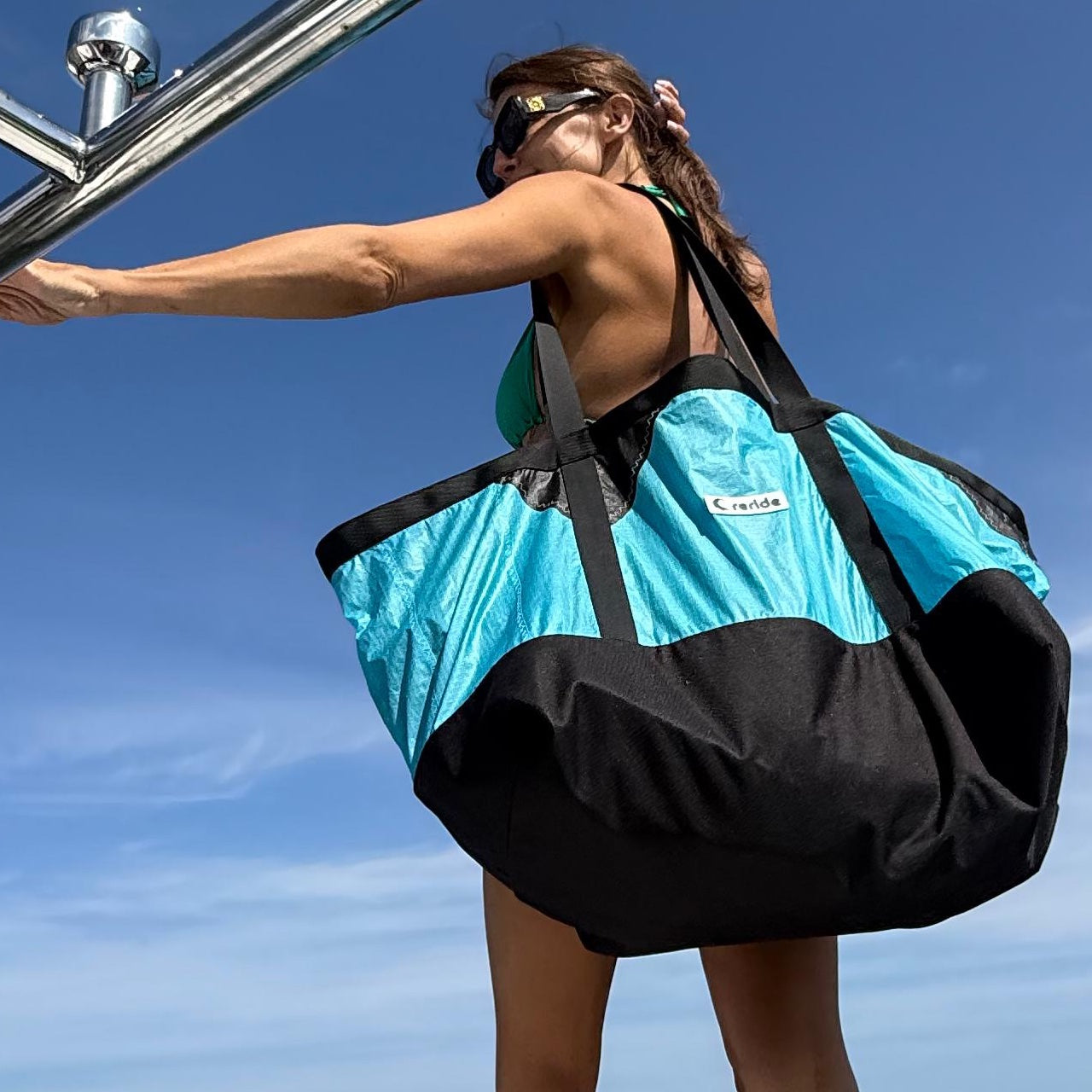
At RERIDE we work with one of the most problematic types of waste: used kitesurfing kites. These are technical fabrics created to handle strong wind, salt and sun. When they retire from the water, most people see them as trash. We see them as the beginning of a new project.
We specialise in recycled bags made from kitesurfing kites. What do we do differently?
- we recover used kites from surfers and kite schools,
- we clean them and carefully select the best panels,
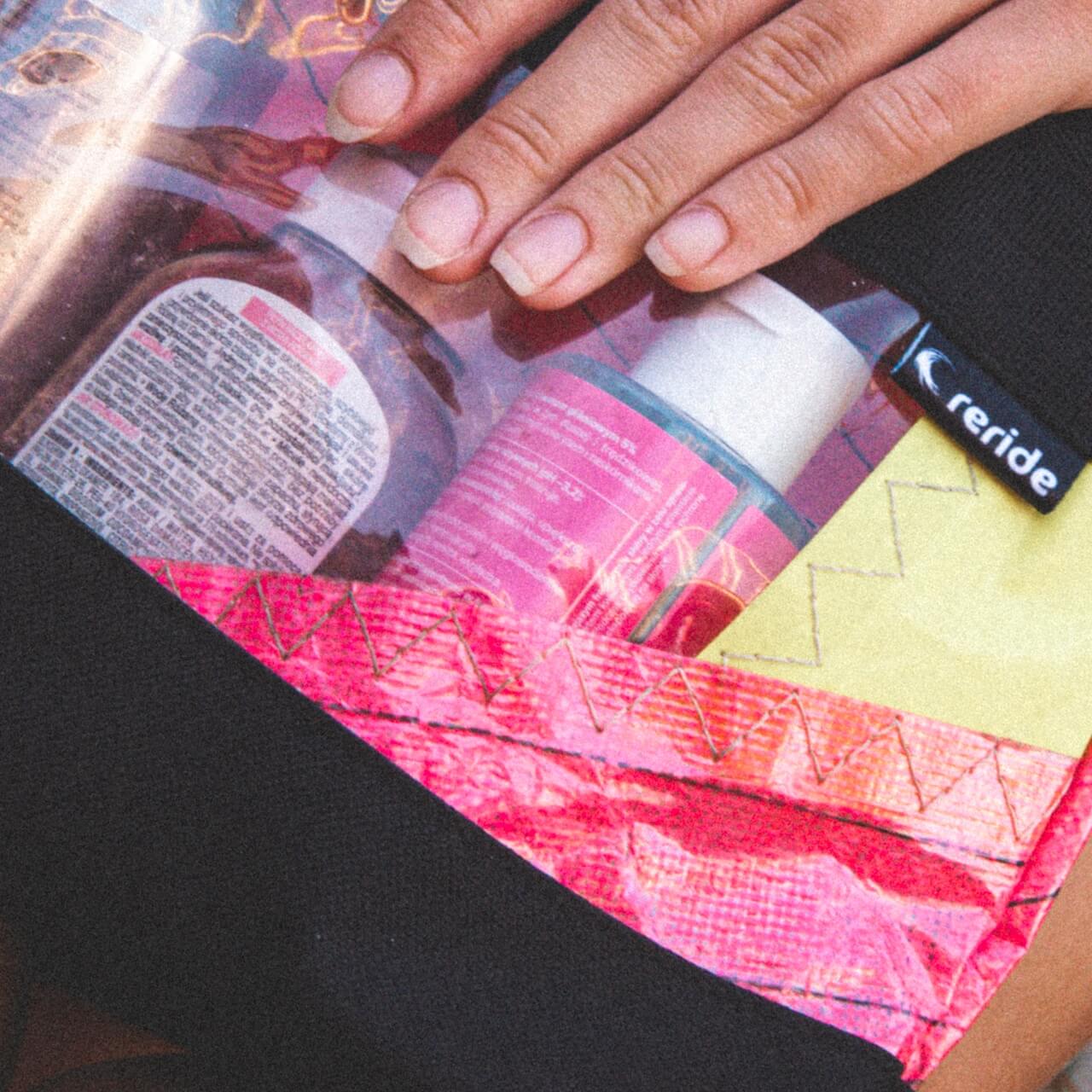
- we design bags from technical materials to use as much of the sail surface as possible,
- we sew locally in Poland, in small batches,
- we focus on durability – reinforced seams, smart details, load testing.
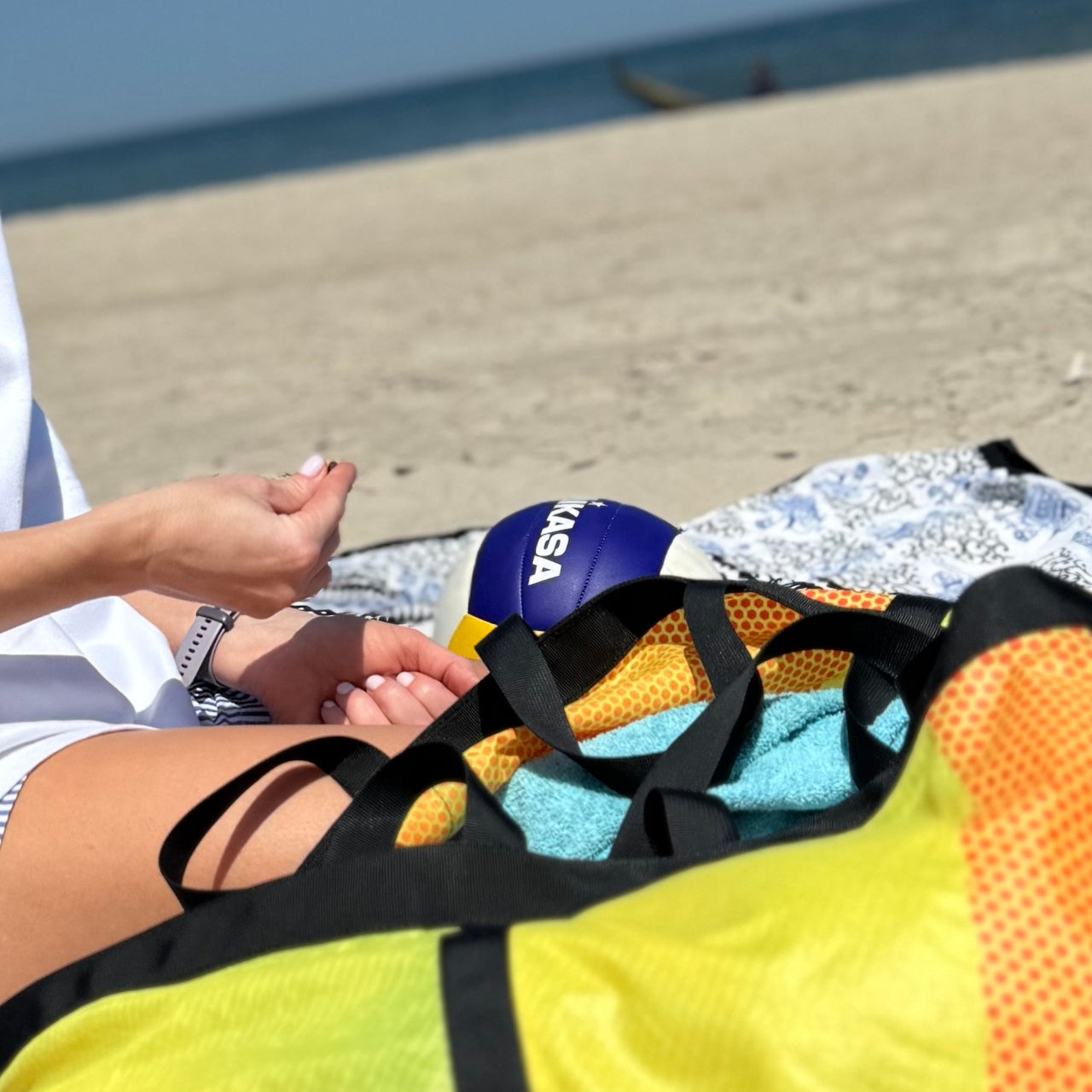
The result? Waste that could lie around for hundreds of years becomes a light, durable upcycled bag that can be used for many seasons. And no one else has the same one – the colour layout and graphics depend on each individual kite.
Who is upcycling in fashion for?
Upcycling is not for everyone. It won’t appeal to someone who needs a new bag every season. But if you:
- care about quality over quantity,
- want to know the story behind the things you wear,
- pay attention to the footprint of your choices,
- like design that doesn’t look like it came from a chain store,
– then recycled bags and upcycling start to make a lot of sense. A bag made from technical materials stops being “just an accessory”. It becomes a statement about how you want to live and shop.
How can you help reduce fashion waste in everyday life?
- buy less often, but choose things that last,
- look for brands that are transparent about materials and production,
- choose upcycled bags and accessories made from repurposed materials,
- repair and pass things on instead of throwing them away,
- ask yourself: “What will happen to this item in 5–10 years?”
Summary – less waste, more meaning
The most problematic fashion waste isn’t just piles of clothes, but also durable technical materials that “no one knows what to do with”. Upcycling shows that there is a solution: they can become beautiful, functional and truly needed products.
At RERIDE, we do this every day – turning used kitesurfing kites into recycled bags with a story and a future. If you want your choices to really matter, this is a good place to start.