



Recycled Bags: Are They Durable for Everyday Use?
Short answer: yes—recycled bags can be extremely durable, but only when the fabric, construction, and stitching are built for real-life wear.
Why do some “recycled” bags wear out so fast?
Being made from reclaimed materials doesn’t automatically guarantee durability. The most common reasons bags fail early are:
- fabric that’s too thin or soft (corners and the base abrade quickly),
- weak seams and no reinforcement at stress points (handles, base, side panels),
- poor structure that twists and strains the joins,
- low-quality hardware (zippers, webbing, buckles) that fails first.
The 3 biggest factors that determine durability
1) Fabric: everyday textile vs. technical performance fabric
The biggest difference is between “nice-looking” fabric and fabric engineered for harsh conditions. Technical fabrics used in watersports are designed for:
- moisture resistance and changing weather,
- high tear strength and tensile performance,
- low weight (so gear stays light).
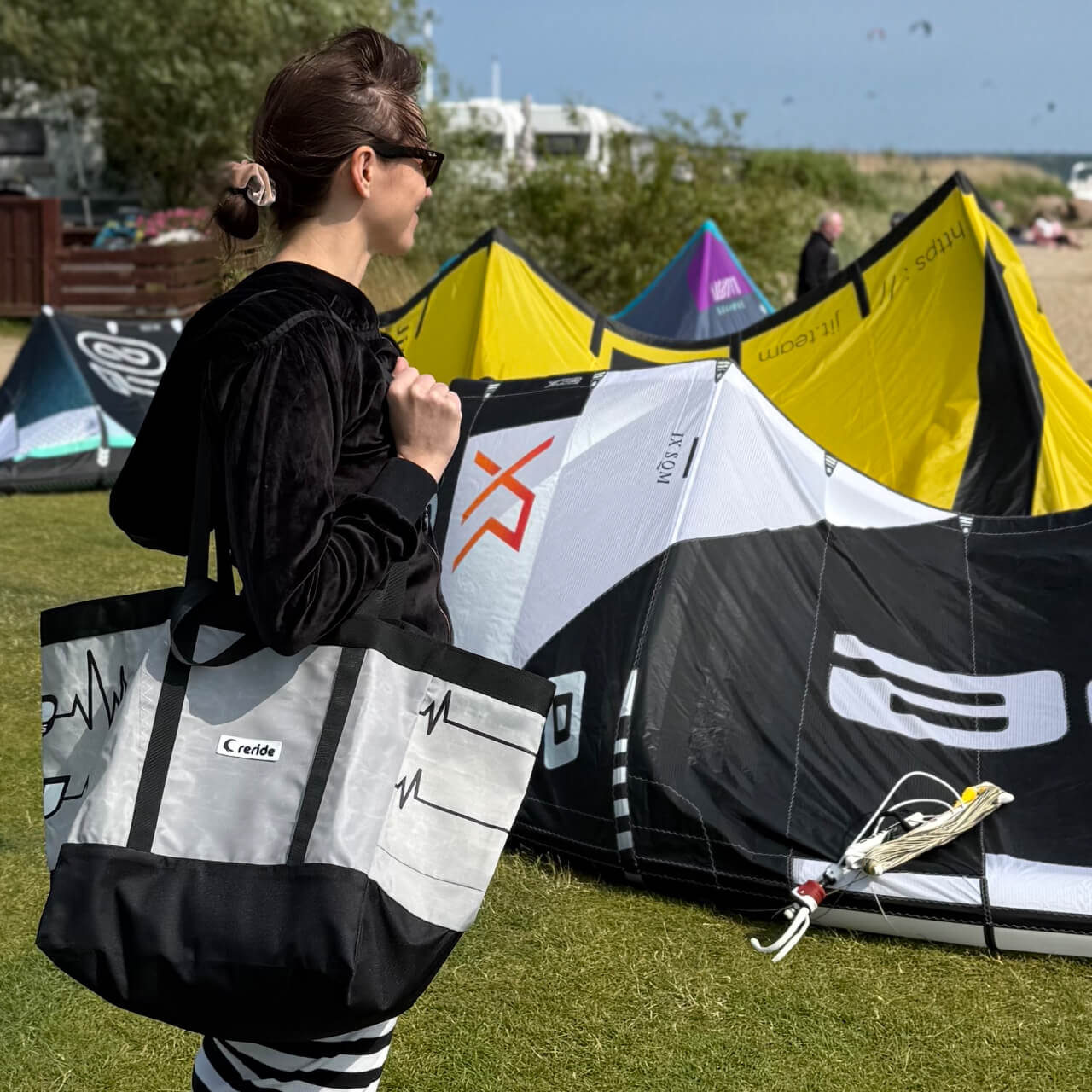
That’s why bags made from reclaimed kitesurfing kites and other technical materials often handle everyday “city tests” better—laptop, groceries, commuting, and rain.
2) Construction: the base and handles matter most
To survive daily use, pay special attention to:
- a reinforced base (it takes the most abrasion),
- handle attachment (stitching + reinforcement),
- edges and corners (the first places to scuff).
3) Stitching and finishing: seams, webbing, hardware
Great bags don’t fail at the seams. Look for:
- even, dense stitching,
- reinforced stress points (handles, sides, base),
- reliable components: strong webbing, a solid zipper, durable hardware.
How to judge durability before you buy (quick checklist)
- What do you carry most? Laptop / groceries / gym kit determines real load.
- Check the base. Is it reinforced and abrasion-resistant?
- Inspect the handles. Are they securely stitched with reinforcements?
- Look inside. A zip pocket and smart organization reduces daily “stress” on the bag.
- Read the details. If the brand only talks “eco” and not construction, treat it as a red flag.
Are recycled bags waterproof?
It depends on the says fabric and the build. “Recycled” doesn’t automatically mean waterproof.
Technical fabrics used in watersports (like reclaimed kitesurfing kites) often handle moisture better by nature—but details still matter: seams, closures, and zipper quality.
Why technical fabrics are a great everyday choice
Daily use is tough. If you want a bag that lasts, the winning mix is usually:
- lightweight comfort,
- weather resistance,
- robust construction (base, handles, corners).
If you want to browse options designed for real-life use, see: all bags and the Urban Helper.
FAQ: recycled bags & durability
Can a recycled bag be as durable as a “regular” bag?
Yes—if it uses strong fabric (ideally technical), smart construction, and reinforced stitching. “Recycled” alone isn’t the deciding factor; build quality is.
Are all reclaimed-material bags unique?
Not always. Uniqueness depends on the material and the making process. With RERIDE, each piece has its own layout and an individual ID.
What fails most often?
Usually the handles and the base. Reinforcement in these areas is a strong durability signal.
Summary: the key takeaway
To choose a recycled bag that actually lasts, focus on: fabric, construction, and stitching. Technical fabrics often perform best for everyday city life—lightweight, resilient, and made for demanding conditions.
Want to dive deeper into the topic? See also our article: how bags are made from reclaimed technical materials.